
Artisan keycaps are handmade, decorative keycaps designed for mechanical keyboards. These small, sculpted pieces replace standard keycaps, often on keys like the Escape key or Function row, to add a personal and artistic touch. Crafted from materials like resin, wood, or metal, they are popular for their unique designs and limited availability, making them highly collectible.
Key Points:
- Materials: Commonly made from resin, wood, metal, or silicone.
- Designs: Inspired by themes like nature, gaming, and pop culture.
- Cost: Prices range from $20 to $200+, depending on complexity and rarity.
- Production: Handmade in small batches using techniques like sculpting, casting, and polishing.
- Compatibility: Most fit Cherry MX-style switches; check your keyboard's layout before buying.
These keycaps are both functional and artistic, offering a way to personalize your keyboard while showcasing craftsmanship. Proper care, such as avoiding harsh chemicals and storing them safely, ensures they remain in great condition.
What are Artisan Keycaps?
sbb-itb-3cb9615
How Artisan Keycaps Are Made
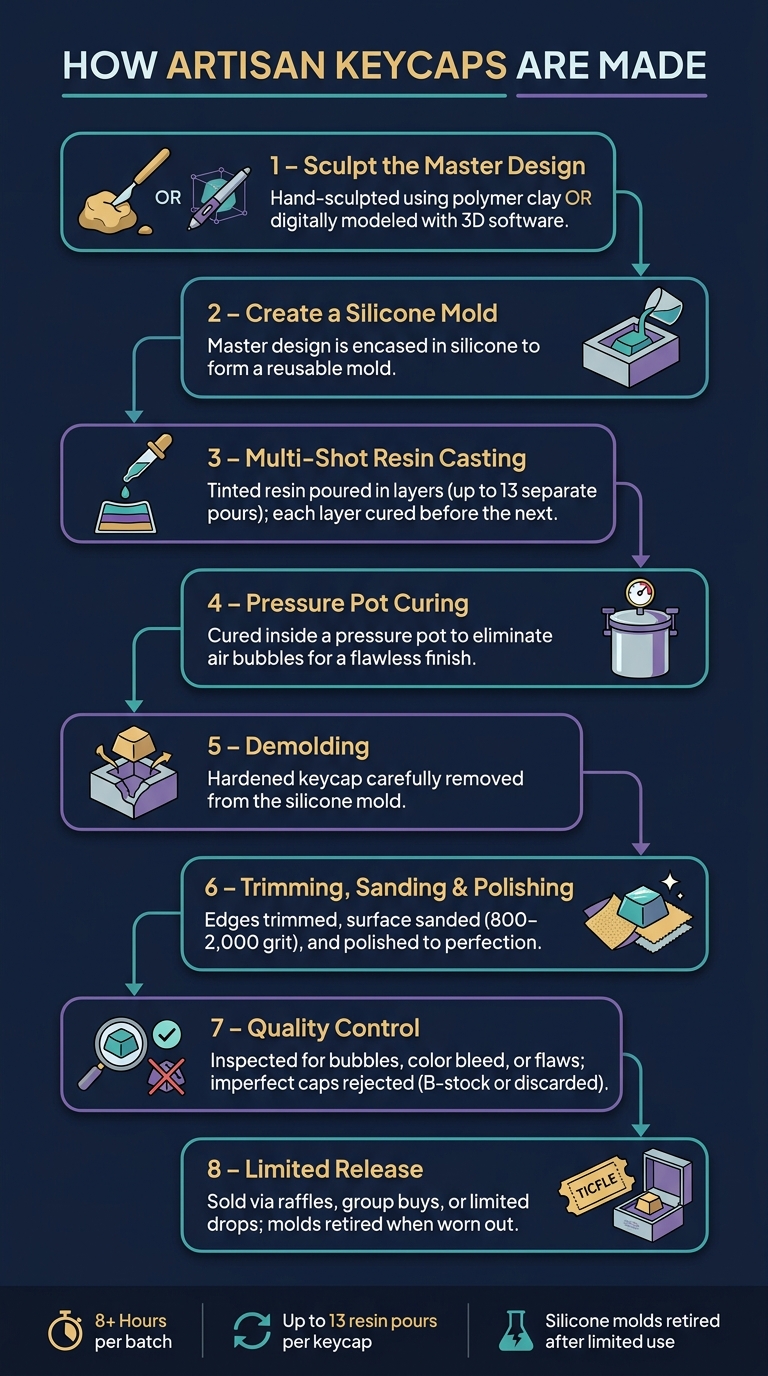
How Artisan Keycaps Are Made: Step-by-Step Crafting Process
Materials Used
The magic of artisan keycaps starts with the materials. Each choice influences the final product's appearance, texture, and durability.
Resin is the go-to material for most makers. Its flexibility allows for intricate designs, vibrant colors, similar to those found in Miami Night keycaps, and even encapsulated objects. It’s perfect for achieving the fine details that make each keycap stand out.
For a heavier or more premium feel, metals like aluminum, brass, and stainless steel come into play. Brass, in particular, is a favorite among collectors because it develops a natural patina over time, adding character. Wood, on the other hand, offers a warm, natural aesthetic, often used in combination with resin for hybrid designs.
| Material | Key Characteristic |
|---|---|
| Resin | Flexible; ideal for vibrant colors and intricate designs |
| Aluminum | Lightweight; anodized finishes available |
| Brass | Dense; gains a patina over time |
| Wood | Natural look; often paired with resin |
| Polymer Clay | Malleable; used for sculpting master prototypes |
The Crafting Process
Creating an artisan keycap is a meticulous process that begins with sculpting a master design. This can be done by hand using polymer clay or digitally with 3D modeling software. Hand-sculpted designs are often more cherished due to the craftsmanship involved.
Once the master design is ready, a silicone mold is created around it. Makers then use a method called multi-shot casting, where tinted resin is poured in layers, with each color cured before the next is added. To ensure a flawless finish, the curing happens inside a pressure pot, which removes air bubbles. After the resin hardens, the keycap is carefully removed, trimmed, sanded, and polished to perfection. This labor-intensive process results in a piece that’s as much a work of art as it is functional.
"I take it a step further by hand-sculpting, casting, and finishing keycaps in small batches in order to create something truly unique and special... Every key is made completely by hand, from start to finish." - KeyForge
The level of artistry packed into these tiny pieces is astounding. As rmendis, an editor at Artisan Collector, explains:
"Understanding the fundamentals hopefully imparts an appreciation for the amount of creativity, artistry, and effort that is packed into roughly 1.5 cubic centimeters, surely making artisan keycaps one of the highest density art forms." - rmendis, Editor, Artisan Collector
Why They Are Made in Small Quantities
Artisan keycaps are not mass-produced for one simple reason: they take a lot of time to make. A single keycap with a complex design might require 13 separate resin pours, each needing its own curing cycle. Completing just one batch of intricate caps can take over 8 hours.
There’s also the issue of mold durability. Silicone molds degrade with use, losing detail and eventually cracking. Many makers choose to retire a design once the molds wear out, making some sculpts truly one-of-a-kind. On top of that, strict quality control means any keycap with imperfections - like bubbles or color bleed - is rejected, further limiting the supply.
"Each artisan keycap made this way is unique, whether the maker produces 10 or 100 of them." - Artisan Collector
This painstaking process, combined with mold wear and high rejection rates, explains why artisan keycaps are often sold through raffles, group buys, or limited drops rather than being readily available in stores.
Choosing the Right Artisan Keycap
Selecting an artisan keycap isn't just about adding flair to your keyboard - it’s about balancing functionality with aesthetics. Here's how to make the right choice.
Compatibility with Switches and Layouts
First and foremost, ensure the keycap is compatible with your mechanical keyboard. The stem type is crucial here. Most artisan keycaps are designed for the Cherry MX cross-stem, which is widely used in mechanical keyboards. To confirm compatibility, check your keyboard's stem by inspecting the center post. While Cherry MX stems dominate the market, some artisans cater to less common options like Topre, Alps, and Buckling Spring stems. If you use an HHKB or Realforce keyboard with Topre switches, look for keycaps with a TMX stem - a hybrid design that supports both MX and Topre setups.
Also, pay attention to the size of the keycap. Most artisans are made for 1u keys, which are standard for Escape keys. If you're placing it on a different key, ensure it won't interfere with neighboring keys or the edges of a high-profile case. Larger or heavily sculpted designs, in particular, can cause alignment issues, so double-check before purchasing.
Design and Profile Considerations
Once compatibility is sorted, think about the design and profile of the keycap. Most artisan keycaps are sculpted for Row 1, which corresponds to the top row of Cherry or OEM profile keycap sets. Using a Row 1 artisan on a lower row may feel awkward while typing.
"If key switches are the heart of a mechanical keyboard, then custom keycaps are its bright and beaming face." - HHKB
Consider how the keycap will blend with your keyboard’s overall look. A single artisan on the Escape key often creates a bold focal point, while multiple artisans might overwhelm the design. For boards with RGB lighting, translucent or encapsulated resin caps can add a dramatic touch by letting light shine through.
Price Range and What to Expect
Artisan keycap prices vary widely based on materials and production techniques. Simpler designs typically cost between $20 and $60, while more intricate pieces - those made with multiple resin layers or premium materials - can go much higher. For instance, studio Keycapor offers standard Pokémon-themed designs like "Mew" and "Flutter Mane" for $45.00, while limited-edition sculpts like "Lucario" and "Deoxys" range from $60.00 to $120.00, reflecting the additional effort involved in 3D modeling, hand-painting, and pressure-pot curing at 50 PSI.
When buying, aim for A-stock keycaps, which are free from surface flaws or internal bubbles. If minor imperfections don’t bother you, B-stock items are often available at a discount. For rare or limited-edition caps, secondary market prices can skyrocket, so purchasing directly from maker drops or raffles is usually the most cost-effective route.
Using and Caring for Artisan Keycaps
Once you understand the artistry behind their design and creation, knowing how to properly install and care for artisan keycaps is essential to keep them in top shape.
How to Install Artisan Keycaps
First, ensure your artisan keycap is compatible with your keyboard's switches. Most artisan keycaps use a standard stem design, but double-check to avoid issues. Use a wire-loop keycap puller to remove the existing keycap. This type of puller distributes pressure evenly, reducing the risk of scratches or damage to your artisan keycap.
When installing, align the cross-shaped recess on the underside of the artisan keycap with the switch stem. Press down gently but firmly, applying even pressure directly downward until the keycap is securely seated. After installation, press the artisan keycap along with the surrounding keys to check for any clearance issues. Sculpted designs, in particular, may sometimes touch adjacent keys or the edges of high-profile cases.
Once installed, proper care will help maintain the beauty and functionality of your artisan keycaps.
Cleaning and Storage Tips
Resin, the most common material for artisan keycaps, requires gentle care. Harsh chemicals and prolonged UV exposure can damage the material. For routine cleaning, use a microfiber cloth to remove dust. For deeper cleaning, soak the keycap briefly in warm, soapy water and use a soft-bristled brush to clean it gently.
"Resin caps often respond well to gentle cleaning with a mild soap solution and a soft brush, avoiding harsh solvents that can dull finishes." - mechanicalkeyboard.com.au
Make sure the keycap is fully dry before reattaching it, especially inside the stem hole, to prevent moisture from reaching the switch. If you're storing unused artisan keycaps, place them in padded organizers or wrap them individually to protect against scratches. Keep them out of direct sunlight, as UV rays can fade colors and warp translucent materials over time.
Consistent cleaning and careful storage will help preserve your keycaps for years, even if you like to swap them out frequently.
Handling and Swapping Keycaps
Frequent swapping of artisan keycaps between keyboards can lead to wear on both the keycap's internal mounting area and the switch stem. To minimize damage, always handle keycaps by their sides, avoiding intricate or delicate details. For hand-painted keycaps, check if a protective matte or satin-matte varnish has been applied to shield the painted design from wear.
If your resin keycap develops minor surface scratches, these can sometimes be repaired. Use wet sanding with fine-grit sandpaper (800 to 2,000 grit) followed by polishing. However, keep in mind that internal damage is not repairable.
Conclusion
Artisan keycaps are like miniature works of art, designed to add a personal touch to your mechanical keyboard. As The Keeblog aptly describes, "So it's like… Jewelry for your keyboard."
When selecting artisan keycaps, it's important to think about the profile height and how they fit alongside neighboring keys. Prices can range widely - from around $20 for simpler designs to over $200 for more intricate, detailed creations. This range highlights the balance between style and practicality when choosing the perfect keycap.
Adding just one artisan keycap, like on the Escape or Enter key, can make a bold statement without overwhelming your keyboard's overall look.
To keep your artisan keycaps in great condition, avoid exposing them to direct sunlight, handle them with clean hands, and store them in a dust-free case. These steps not only maintain their appearance but can also help preserve their resale value over time.
From their handcrafted creation to proper care and thoughtful placement, artisan keycaps turn your keyboard into a personal masterpiece. They beautifully blend function with artistic expression, capturing the essence of what makes mechanical keyboards so customizable. Whether you're drawn to their craftsmanship, enjoy collecting them, or simply want your keyboard to stand out, check out KeebsForAll for a wide range of components and accessories to enhance your setup.
FAQs
Are artisan keycaps worth it for daily typing?
Artisan keycaps can be a worthwhile investment, but it all comes down to what matters most to you. These keycaps stand out for their one-of-a-kind designs and the personal flair they bring to a keyboard. However, they’re not always the most practical choice for everyday typing. Their higher price and potential differences in comfort compared to standard keycaps make them better suited for decoration rather than speed or accuracy.
Many enthusiasts strike a balance by placing artisan keycaps on less frequently used keys, like the Escape key or function keys. This approach allows them to enjoy the visual appeal of these handcrafted pieces without sacrificing the usability of their main typing keys.
How can I tell if an artisan keycap will fit my keyboard?
To ensure an artisan keycap fits your keyboard, start by confirming your keyboard uses compatible switches, such as MX-style stems. Some artisan keycaps are designed with TMX stems, allowing them to fit both MX and Topre switches. Next, check the key size and profile - artisan keycaps are often sculpted for specific rows, and larger keys like spacebars require exact measurements. Always double-check the seller's specifications and measure your keys before making a purchase.
Where do people buy artisan keycaps?
Artisan keycaps are usually bought from online shops and marketplaces that focus on mechanical keyboard parts. Enthusiasts often snag these handcrafted, limited-edition pieces through store collections, group buys, or raffles organized by makers or keyboard-specific retailers. Always double-check your keyboard’s layout and switch type to make sure the keycaps will fit before making a purchase.