
Keycap Materials: Guide for Beginners
[ Back to Mechanical Keyboards 101 ]Keycap materials directly affect how your keyboard feels, sounds, and lasts over time. The three most common materials are ABS, PBT, and POM, each offering unique characteristics:
- ABS (Acrylonitrile Butadiene Styrene): Smooth texture, vibrant colors, and a high-pitched "clacky" sound. Affordable but prone to developing a glossy shine over time.
- PBT (Polybutylene Terephthalate): Durable with a textured matte finish that resists shine. Produces a deeper "thocky" sound and retains its appearance longer. Limited to softer color tones.
- POM (Polyoxymethylene): Smooth, waxy feel with self-lubricating properties. Known for durability and softer acoustics. Less common and more expensive.
Other materials like polycarbonate, metal, wood, and resin cater to niche preferences, offering unique looks and sound profiles.
Quick Comparison
| Material | Durability | Texture | Sound Profile | RGB Compatibility | Cost | Best Use Case |
|---|---|---|---|---|---|---|
| ABS | Low | Smooth | High-pitched / Clacky | High (vibrant colors) | $ | Budget or colorful designs |
| PBT | High | Textured / Matte | Deep / Thocky | Moderate (opaque) | $ to $$ | Daily typing, gaming |
| POM | High | Buttery / Waxy | Deep / Muted | Excellent (translucent) | $$ | Enthusiast builds |
Choosing the right material depends on your typing style, budget, and aesthetic preferences. For durability and texture, PBT is a reliable choice. For vibrant colors or smoother textures, ABS or POM may suit you better. Testing different materials in person is the best way to find your perfect match.
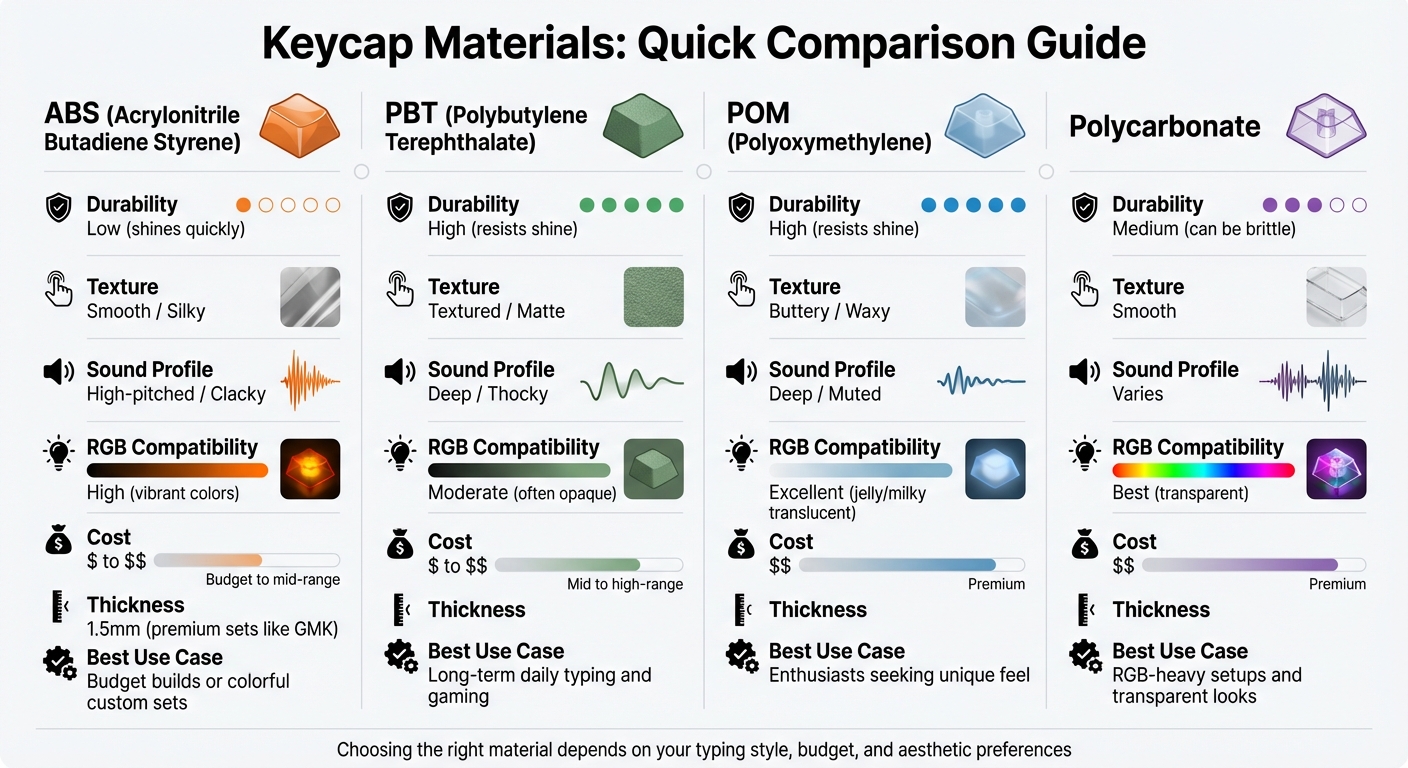
Keycap Materials Comparison Chart: ABS vs PBT vs POM Properties
The Hottest Keycap Materials 🔥 An Honest Review
sbb-itb-3cb9615
Common Keycap Materials
When it comes to keycaps, the material they’re made from plays a huge role in how your keyboard feels, sounds, and stands up to wear over time. The most common materials you'll encounter are ABS, PBT, and POM, each offering its own set of characteristics. Beyond these, there are also specialty materials like polycarbonate, metal, wood, and resin that cater to more niche preferences, especially in custom keyboards.
ABS Keycaps
ABS (Acrylonitrile Butadiene Styrene) is the most commonly used plastic for keycaps. Its smooth texture and high-pitched "clacky" sound make it a favorite for many users. ABS is also known for its ability to showcase vivid, saturated colors, making it ideal for bold and vibrant designs.
"ABS is the most common plastic used for keycaps, found in everything from budget pre-built keyboards to the most expensive, sought-after custom sets." - Custom Keyboards Editorial
However, ABS keycaps have a downside: they tend to develop a shiny, glossy surface over time due to finger oils and friction. While this doesn’t affect functionality, some users find the cosmetic change less appealing. High-end ABS keycaps, like those made by GMK, are thicker - around 1.5mm - offering better sound and durability compared to thinner, budget options.
PBT Keycaps
PBT (Polybutylene Terephthalate) is the go-to choice for those who value durability and a long-lasting matte finish. Unlike ABS, PBT resists shine even with heavy use, maintaining its grainy, textured feel over time. This texture provides a tactile experience that many typists and gamers enjoy.
"PBT keycaps are highly favored by typists and gamers. They are made from a PBT plastic material that is synonymous with hardness and durability." - Liam H., Content Creator, Kinetic Labs
PBT keycaps are known for their deeper, "thocky" sound compared to the sharper tone of ABS. They’re also resistant to yellowing, which makes them a popular choice for longevity. However, PBT keycaps tend to come in softer or pastel color tones, as the material doesn’t allow for the same vibrant hues as ABS. They’re also pricier due to the more complex manufacturing process.
POM Keycaps
POM (Polyoxymethylene) strikes a balance between durability and feel. It’s as tough as PBT but offers a smooth, waxy surface instead of a textured one. This self-lubricating property creates a silky typing experience, which enthusiasts often describe as frictionless.
"POM (Polyoxymethylene) keycaps are less common but loved by enthusiasts. They're durable like PBT but feel smoother and 'silkier' to type on." - Azzief Khaliq, Writer, Voltcave
A standout variant is "Jelly POM", which features a translucent, milky finish designed to diffuse RGB lighting beautifully across the keycap. This style has become increasingly popular for custom builds that emphasize lighting effects. While POM keycaps are highly sought after, they’re less common and often more expensive than ABS or PBT, typically sold in limited boutique runs.
Other Materials
For those looking to stand out, there are niche materials that offer unique aesthetics and features:
- Polycarbonate (PC): Great for transparent or smoky keycaps that let RGB lighting shine through.
- Metal (Aluminum or Brass): Adds durability and weight, though it produces a distinct "pingy" sound.
- Wood (Walnut or Rosewood): Provides a natural, earthy look with a textured feel and unique sound profile.
- Resin: The material of choice for handcrafted "Artisan" keycaps, often used as decorative accents. These can range from $20 to over $100 per key.
- Ceramic: Known for a premium "thock" sound and cold-to-the-touch feel that warms with use. Heavier than most materials, with alpha keys averaging 4g and spacebars up to 22g.
- Rubber or Silicone: Commonly used for gaming keys (like WASD) to prevent slipping during intense sessions.
Each material offers its own experience, whether you're looking for optimal performance, aesthetic appeal, or just something different to make your keyboard uniquely yours.
Keycap Material Comparison
Keycap materials vary in durability, texture, sound, and cost. Here's a closer look at how they stack up.
ABS keycaps are known for their affordability and vibrant color options. However, they tend to develop a glossy finish over time, which some users may find less appealing. On the other hand, PBT keycaps are celebrated for their durability and matte texture that remains intact even after years of use, though they often come with a higher price tag. POM keycaps offer a smooth and buttery feel, but they are less common and typically more expensive.
"PBT is often called the 'endgame material.' Many users highlight how PBT caps feel more premium and stay looking new for years." - RGBKeys
For those prioritizing RGB lighting, polycarbonate keycaps are ideal due to their transparency, allowing light to shine through the entire keycap. ABS is also a solid choice for vibrant, backlit legends, while standard PBT is usually opaque unless designed in a pudding style. In terms of sound, ABS keycaps produce a high-pitched, clacky noise, while PBT and POM provide a deeper, more muted tone that many typists prefer.
Material Comparison Table
Here's a quick breakdown of the key differences:
| Material | Durability | Texture | Sound Profile | RGB Compatibility | Cost | Best Use Case |
|---|---|---|---|---|---|---|
| ABS | Low (shines quickly) | Smooth / Silky | High-pitched / Clacky | High (vibrant colors) | $ to $$ | Budget builds or custom sets |
| PBT | High (resists shine) | Textured / Matte | Deep / Thocky | Moderate (often opaque) | $$ to $$$ | Long-term daily typing and gaming |
| POM | High (resists shine) | Buttery / Waxy | Deep / Muted | Excellent (jelly/milky) | $$$ | Enthusiasts seeking a unique feel |
| Polycarbonate | Medium (can be brittle) | Smooth | Varies | Best (transparent) | $$$ | RGB-heavy setups and transparent looks |
How to Choose Your Keycap Material
When selecting keycaps, it’s all about finding the right balance between how you use your keyboard, how much you’re willing to spend, and the look you want to achieve.
Match Material to Your Typing Style
Your typing habits should guide your decision. If you’re a heavy typist, PBT keycaps offer a textured, non-slip surface that feels sturdy and reliable. On the other hand, ABS keycaps provide a smoother, faster touch that some users might prefer.
For gaming, you might want to focus on functionality. Textured PBT keycaps on essential keys like WASD or even metal keycaps for movement can improve grip and control during intense gameplay. If you’re in a shared workspace, consider dense PBT or soft-touch keycaps to help reduce the noise of typing, keeping things quieter for those around you.
Balance Budget and Appearance
Your budget and desired aesthetic will also influence your choice. ABS keycaps are often the most affordable and usually come standard with pre-built keyboards. If you’re looking for something mid-range, dye-sublimated PBT sets are a great option, typically costing between $50 and $100. These sets offer durable legends that won’t fade over time. At the high end, double-shot ABS keycaps from brands like GMK can cost more than the keyboard itself, often requiring group buys with minimum orders of 500 sets.
For RGB enthusiasts, materials like polycarbonate or acrylic are ideal for maximum light diffusion. Vibrant ABS keycaps also pair well with backlighting, thanks to their high-contrast legends. However, if you’re leaning toward PBT, be aware that it’s usually opaque, which can limit RGB visibility unless you choose a pudding-style design. Once you’ve narrowed down your options, it’s essential to test how each material feels to ensure it aligns with your preferences.
Test Different Materials
The feel of keycaps is a personal experience, so testing different materials is key. If possible, attend local meetups or community events where you can try out various options. Remember, the combination of a keycap’s material and its profile can significantly impact how it feels to type. For instance, what feels great on a Cherry profile might feel awkward on a taller SA profile.
"There's no definitively 'better' material... it's more about the keyset and manufacturer than any inherent material qualities." - Azzief Khaliq, Writer, Voltcave
If you don’t have access to in-person testing, start with an affordable PBT set. Its textured and durable nature is often considered a "buy it for life" option. Compare it with a budget ABS set to get a sense of the difference in tactile response. This hands-on comparison will help you find the material that best suits your typing style and needs.
Conclusion
Deciding on the right keycap material comes down to what matters most to you. ABS keycaps are known for their vibrant colors and smooth, silky finish, paired with a sharp "clack" sound. However, they may develop a shiny surface over time. On the other hand, PBT keycaps are more durable, with a textured, matte surface, and produce a deeper "thock" sound that resists wear. If you're looking for something different, POM keycaps offer a waxy smooth feel and softer acoustics.
Ultimately, there’s no one-size-fits-all answer. As Custom Keyboards explains: "Neither! The choice between ABS and PBT (and others) is purely a matter of preference." Your decision should align with what you value most - whether it’s durability, sound, aesthetics, or texture.
Here’s a simple way to think about it: Profile Height × Material Density × Surface Texture = Typing Experience. The combination of keycap material and profile shapes how your keyboard feels and sounds. What works perfectly on one keyboard might feel off on another.
To find your ideal fit, try comparing affordable ABS and PBT sets to see which feel better to you. If possible, test out different keycap sets in person to get a sense of their texture and sound.
When you're ready to dive deeper into keycap options, check out KeebsForAll (https://keebsforall.com) for a wide selection of high-quality keycaps tailored to elevate your typing experience.
FAQs
How can I tell ABS from PBT keycaps at home?
You can tell ABS and PBT keycaps apart by their texture and look. PBT keycaps often have a matte finish with a slightly rough texture, which helps reduce slipperiness. In contrast, ABS keycaps usually have a smooth, shiny surface that feels more slippery. To identify them, run your fingers over the keycaps - if they feel textured and matte, they’re likely PBT; if they’re smooth and glossy, they’re probably ABS.
Do keycap materials affect keyboard sound more than switches?
Keycap materials play a bigger role in shaping keyboard sound than switches do, acting as acoustic resonators. For instance, ABS keycaps are known for producing a sharper, higher-pitched sound, while PBT keycaps generate a deeper, more muted tone. Beyond the material itself, factors like the thickness and shape of the keycaps also come into play. Thicker or denser keycaps tend to dampen higher frequencies and emphasize lower tones, giving your keyboard a distinct acoustic profile.
What keycap material is best for bright RGB lighting?
POM keycaps are a great fit for showcasing bright RGB lighting. Their translucent design lets more light pass through, boosting the overall glow and making RGB effects on mechanical keyboards stand out beautifully.