
Artisan Keycaps vs. Mass-Produced Keycaps
[ Back to Mechanical Keyboards 101 ]Artisan and mass-produced keycaps serve different purposes for mechanical keyboard enthusiasts. Artisan keycaps are handcrafted, decorative pieces often made in small batches, while mass-produced keycaps prioritize functionality, uniformity, and affordability. Here’s a quick breakdown:
// keycap fix path
Need keycaps that actually fit and feel better?
If this guide helps you diagnose the problem, the next step is simple: check compatibility, use the right puller, then choose a set that matches your layout. Start with our in-stock keycap sets, grab a CY stainless steel keycap and switch puller, or look at the budget-friendly KFA Cherry Profile Blank PBT keysets.
- Artisan Keycaps: Hand-sculpted, made from materials like resin, metal, or wood. They are rare, collectible, and add a personal touch but are expensive and less practical for daily use.
- Mass-Produced Keycaps: Factory-made using ABS, PBT, or POM plastic. These are durable, consistent, and affordable, designed for everyday typing and gaming.
Both types have their pros and cons. If you value artistry and exclusivity, go for artisan keycaps. If you want practicality and budget-friendly options, mass-produced sets are the way to go.
Quick Comparison
| Feature | Artisan Keycaps | Mass-Produced Keycaps |
|---|---|---|
| Production Method | Hand-sculpted, resin casting | Industrial injection molding |
| Materials | Resin, metal, wood, clay | ABS, PBT, POM |
| Batch Size | Small (under 100 units) | Large-scale (thousands) |
| Durability | Varies (resin scratches, metal lasts) | High (PBT lasts 5–10+ years) |
| Price | $20–$300+ (single key) | $20–$100 (full set) |
| Availability | Limited runs, raffles | Readily available |
| Use Case | Decorative, collectible | Everyday typing, gaming |
Artisan keycaps are ideal for collectors or as statement pieces, while mass-produced keycaps are practical and reliable for daily use. Many enthusiasts combine both, using a full mass-produced set with one or two artisan keycaps for flair.
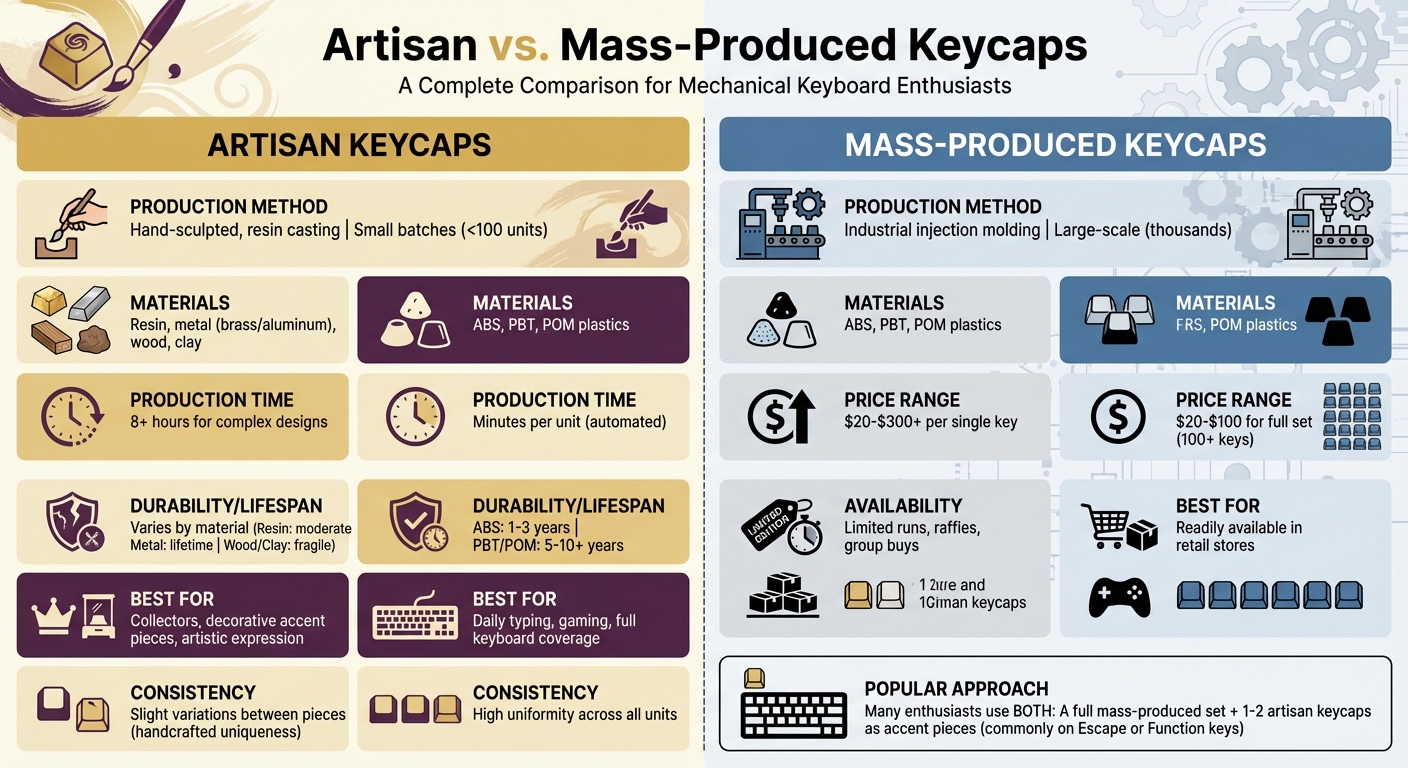
Artisan vs Mass-Produced Keycaps: Complete Comparison Guide
How Each Type Is Made
Artisan Keycap Craftsmanship
Creating artisan keycaps is a meticulous process that starts with hand-sculpting a master design. Artists typically use materials like Monster Clay, CX5, or Sculpey to shape these intricate designs, working within an incredibly small space - just 1.5 cubic centimeters. Once the master is perfected, a two-part silicone mold is made from it, serving as the template for casting.
The casting process involves pouring liquid resin in layers, known as "shots." Each layer adds unique colors or details, with some designs requiring up to 13 separate shots and taking over 8 hours to complete a single batch. To ensure the resin cures without imperfections like air bubbles, artists use pressure pots or vacuum chambers. This step is crucial for maintaining clarity and structural integrity, especially for the stem.
Advanced techniques elevate these keycaps to art. Methods like multi-shot casting (layering colored resins), resin writing (using syringes to "paint" with resin), marbling (creating swirling color patterns), and encapsulation (embedding objects in clear resin) add intricate details. Some even use cold casting, where metal powders are mixed with resin to achieve a metallic effect. However, silicone molds degrade over time, limiting production runs to fewer than 100 units per batch.
This hands-on approach results in unique pieces but contrasts sharply with the efficiency of mass production.
Mass-Produced Keycap Manufacturing
Mass-produced keycaps focus on speed and consistency, relying on industrial injection molding. In this process, molten ABS or PBT plastic is injected into metal molds under high pressure. The plastic cools quickly, producing uniform keycaps in large quantities. Automation plays a significant role, minimizing labor and enabling factories to churn out thousands of units efficiently.
For legends (letters and symbols), manufacturers use three main techniques: double-shot molding, dye-sublimation, and laser etching. Double-shot molding involves injecting two plastics to create legends that won’t fade over time, making it the most durable option. Dye-sublimation uses heat to transfer dye into the plastic, while laser etching burns designs onto the surface. While double-shot molding is the most durable method, it’s also the most expensive due to the high cost of tooling. However, the metal molds used in factories are designed to last through thousands of production cycles, spreading out these costs.
Production Process Comparison Table
| Feature | Artisan Keycaps | Mass-Produced Keycaps |
|---|---|---|
| Primary Method | Hand-sculpting and resin casting | Industrial injection molding |
| Materials | Resin, metal (brass/aluminum), wood, clay | ABS, PBT, POM, Polycarbonate |
| Batch Size | Small batches (often <100 units) | Large-scale factory runs (thousands) |
| Legend Creation | Multi-shot resin or hand-painting | Double-shot, dye-sub, or laser etching |
| Production Time | 8+ hours for complex designs | Minutes per unit (automated) |
| Consistency | Slight variations between pieces | High uniformity across all units |
sbb-itb-3cb9615
What are Artisan Keycaps?
Materials and How Long They Last
The material used in keycaps plays a big role in their appearance and durability. Whether you're drawn to handcrafted designs or prefer the reliability of mass-produced options, each material comes with its own pros and cons.
Artisan Keycap Materials
Resin is the go-to material for artisan keycaps, offering endless possibilities for customization. Artists often embed objects like flowers, glitter, or even intricate 3D designs into translucent resin, creating a stunning effect that reacts beautifully to RGB lighting. While resin resists shine to some extent, it’s prone to scratches over time. The vibrant colors remain intact, but these keycaps are more about collecting than daily use.
Metal artisan keycaps, crafted from materials like aluminum, brass, stainless steel, zinc alloy, or titanium, are both visually striking and incredibly durable. These keycaps can last a lifetime without showing wear, making them the toughest option available. However, their added weight can alter how your keyboard feels and sounds, which might not suit everyone.
Wood and clay keycaps focus more on aesthetics than durability. Wood options, made from materials like walnut, cherry, rosewood, or bamboo, provide a natural, earthy look but are susceptible to chipping and moisture damage. Clay keycaps, while intricately designed, are extremely fragile and best suited for decorative purposes.
On the other hand, mass-produced keycaps prioritize consistency and performance, using standardized materials.
Mass-Produced Keycap Materials
ABS (Acrylonitrile Butadiene Styrene) is the most common material for mass-produced keycaps. It’s smooth, easy to mold, and perfect for creating vibrant colors and sharp legends. However, ABS is softer, which means it quickly develops a glossy, greasy appearance from finger oils and friction. Over time, the surface thins, legends may fade, and exposure to UV light can cause yellowing. With a low melting point of around 105°F (40.5°C), ABS keycaps typically show noticeable wear within 1–3 years.
PBT (Polybutylene Terephthalate) is a favorite among keyboard enthusiasts for its durability and texture. This harder plastic maintains its matte finish for 5–10+ years. PBT is highly resistant to heat, chemicals, and UV yellowing, withstanding temperatures up to 225°F (107°C). As Liam H. from Kinetic Labs explains:
"For mechanical keyboard enthusiasts, there isn't a better option than PBT. It doesn't just hold up to years of heavy use but, in many cases, decades."
POM (Polyoxymethylene) is a lesser-known but premium choice, prized for its smooth, almost "creamy" feel. It shares PBT's durability and excellent resistance to shine, lasting 5–10+ years.
Materials and Durability Comparison Table
| Material | Type | Shine Resistance | Wear Patterns | Expected Lifespan |
|---|---|---|---|---|
| ABS | Mass-Produced | Poor; develops greasy look fast | Surface thins; legends may rub off | 1–3 years (aesthetic) |
| PBT | Mass-Produced | Excellent; stays matte | Resists friction and UV yellowing | 5–10+ years |
| POM | Mass-Produced | Very Good | Smooth, resists oil | 5–10+ years |
| Resin | Artisan | Moderate | Can scratch; colors stay vibrant | Varies (Collectible) |
| Metal | Artisan | Excellent | Virtually no wear; "unbreakable" | Lifetime |
| Wood | Artisan | Moderate | Prone to chipping and moisture damage | Varies; requires care |
| Clay | Artisan | Low | Highly fragile; prone to snapping | Short (Decorative) |
Design Options and Customization
When it comes to keycap design, artisan and mass-produced options cater to entirely different needs. One emphasizes artistic expression, while the other focuses on consistency and practicality.
Artisan Keycap Designs
Artisan keycaps are like tiny sculptures for your keyboard. As Kawaii Keycaps aptly puts it:
"More than just a tool, a keyboard is almost a window into the Internet, a vision of yourself, and occasionally an art piece."
Each keycap, crafted within a compact 1.5 cubic centimeters, showcases remarkable detail. Artists sculpt everything from pop culture icons and video game characters to food items, terrariums, and anatomical designs, offering a huge variety of themes and styles.
Techniques like marbling, masking, and resin writing bring these designs to life, creating collectible pieces. Some even feature "encapsulation", where tiny objects - like skulls or miniature landscapes - are encased in clear resin. For example, Hot Keys Project’s "Raven" keycap includes a movable visor, blending artistry with interactivity.
Due to their intricate shapes - think 3D objects or character heads - artisan keycaps are best suited for non-alpha keys like Escape, Function, or arrow keys. Hannah Miller from Dot Esports describes them as "the jewelry of keyboards", highlighting their decorative appeal.
Artisan keycaps are often released in limited runs, group buys, or raffles, making them highly collectible. Jelly Key, for instance, introduced eco-conscious designs like their "Cans Craft" series, inspired by recycled aluminum cans. Prices range from $20 to $40 when purchased directly from artists, but rare pieces can fetch two to three times that on the aftermarket.
In contrast, mass-produced keycaps prioritize uniformity and functionality over artistic individuality.
Mass-Produced Keycap Designs
While artisan keycaps are all about unique artistry, mass-produced keycaps focus on delivering a consistent, polished look across your entire keyboard. These sets are designed to cover all 100+ keys, offering a cohesive aesthetic through matching color schemes, fonts, and legends.
Mass-produced keycaps follow standardized profiles like Cherry, OEM, or SA, which dictate the height and curve of the keys. Within these profiles, manufacturers offer a variety of themes - think minimalist black-and-white sets, bright pastel palettes, or retro-inspired designs. These profiles ensure a uniform appearance and smooth typing experience.
Unlike artisan keycaps, mass-produced sets are widely available in retail stores, so there's no need to wait for group buys or enter raffles. They’re practical, affordable, and easy to find, but they lack the one-of-a-kind charm that makes artisan keycaps so special.
The choice comes down to what you value: the artistic flair of a handcrafted keycap or the convenience and uniformity of a mass-produced set.
Price and Value Comparison
The stark price difference between artisan and mass-produced keycaps boils down to how they’re made, the materials used, and their exclusivity.
Artisan Keycap Pricing
Artisan keycaps usually start at $20 to $40 when purchased directly from the artist during initial releases. But that’s just the baseline. Rare designs and coveted color combinations can skyrocket in value on the aftermarket, often selling for $50 to $300 or more - sometimes two to three times their original price.
Take the Typebeast sculpt by Kudos, for example. Released in December 2020, it was crafted using a meticulous 13-shot resin process that required over 8 hours per batch.
The process isn’t just time-consuming; it’s also risky. High failure rates from defects like air bubbles or color bleeding mean artisans absorb production losses. Add to that the cost of premium materials, and it’s clear why these keycaps command such high prices.
As rmendis, Editor at Artisan Collector, puts it:
"Hand sculpted, hand cast resin caps represent some of the most impressive feats of manual artisanal labor across multiple disciplines, and garner critical acclaim from aficionados."
Exclusivity is another driving factor. Many artisans release their keycaps in limited group buys or through raffles on platforms like Discord. This scarcity fuels demand, pushing up aftermarket prices even further. For some collectors, artisan keycaps are more than accessories - they’re investments, with rare pieces often retaining or increasing in value over time.
While artisan keycaps are prized for their craftsmanship and rarity, mass-produced keycaps focus on affordability and efficiency.
Mass-Produced Keycap Pricing
Mass-produced keycaps, on the other hand, rely on automation to keep costs down. A full set of keycaps covering over 100 keys typically costs between $20 and A full set covering over 100 keys typically costs between $20 and $10000, depending on the material (like ABS or PBT) and the profile.
This affordability comes from industrial production methods. Injection molding allows factories to produce thousands of identical keycaps with minimal labor costs. There’s no hand-sculpting or multi-stage resin casting, and defective units are almost nonexistent. The result? Consistent quality at a fraction of the cost of artisan keycaps.
For less than the price of a single artisan keycap, you can get a full set of mass-produced keycaps. These sets offer a cohesive look, standardized profiles for comfortable typing, and durability that’s built to withstand heavy daily use - all without straining your budget.
Cost and Value Comparison Table
| Feature | Artisan Keycaps | Mass-Produced Keycaps |
|---|---|---|
| Price Point | $50–$300+ (Single Key) | $20–$100 (Full Set) |
| Production Method | Hand-sculpted, hand-cast resin | Industrial injection molding |
| Availability | Limited runs, raffles, group buys | Mass-market, always in stock |
| Primary Value | Artistry, exclusivity, collectibility | Affordability, durability, utility |
| Labor | 8+ hours per batch | Automated factory process |
| Consistency | Slight variations due to handcrafting | High uniformity across all keys |
Ultimately, the decision comes down to what you value more: the artistic individuality of handcrafted keycaps or the practical, cost-effective coverage of mass-produced sets.
Which Type Should You Choose
Deciding between artisan and mass-produced keycaps comes down to your personal preferences - whether you're drawn to artistic expression or prioritize practicality. Both options cater to different needs, so the "right" choice depends on how you use your keyboard and what matters most to you. Here's a closer look at when each type might be the better fit.
When to Buy Artisan Keycaps
Artisan keycaps are perfect if you're looking to add a unique, personal touch to your keyboard. For collectors, these keycaps offer a sense of exclusivity and can even become valuable over time. With production runs often limited to fewer than 100 units, owning one means you're getting something truly rare. In fact, some artisan keycaps maintain or even increase their value as time goes on.
If you want to snag one at retail prices (usually between $20 and $40), follow specific artists on platforms like Instagram or Discord. Many announce flash sales or raffles there. However, if you miss out on the initial sale, be prepared to pay a premium on the aftermarket - sometimes double or more.
To get started, try replacing just one or two keys to see how different textures and heights affect your typing experience. Just make sure your keyboard supports Cherry MX–style stems and has enough clearance for larger sculpted designs.
When to Buy Mass-Produced Keycaps
If your priority is consistency and durability for everyday use, mass-produced keycaps are the way to go. Gamers and heavy typists often prefer standard profiles like Cherry or OEM, especially in PBT material. These keycaps offer a textured, matte finish that resists shine and holds up well during long typing or gaming sessions.
"The keycap profile that is best for gaming is whichever one feels the most familiar and comfortable. We definitely recommend checking out a set of Cherry profile PBT keycaps." - Switch and Click
For the same cost as a single artisan keycap, you can often get an entire set of mass-produced keycaps. These sets provide a consistent height, texture, and color scheme. Many keyboard enthusiasts opt for a mix-and-match approach: using a mass-produced set for most keys while featuring a single artisan keycap - often on the Escape key - for a touch of flair without sacrificing functionality.
Conclusion
Deciding between artisan and mass-produced keycaps comes down to what matters most to you in your keyboard setup. Artisan keycaps are handcrafted in small batches, celebrated for their one-of-a-kind designs and collectibility, with prices typically ranging from $20 to $40. On the other hand, mass-produced keycaps focus on consistency, comfort, and affordability, thanks to automated manufacturing.
In short: if you’re drawn to unique designs and exclusivity, artisan keycaps might be your pick. But if you prioritize reliable performance and everyday usability, mass-produced keycaps are a solid choice. Many enthusiasts enjoy the best of both worlds by using a full mass-produced set and adding one or two artisan keycaps as accents on keys like Escape or in the Function row.
Ultimately, your decision should align with your budget, typing preferences, and sense of style. Whether you're assembling your first mechanical keyboard or adding to a growing collection, both artisan and mass-produced keycaps bring something special to the table.
FAQs
How do artisan keycaps affect typing feel and sound?
Artisan keycaps, meticulously crafted from materials like resin, wood, or metal, offer a typing experience that's a step above the ordinary. Their heavier and denser construction delivers a solid, satisfying feel with every keystroke, making typing more engaging. Whether polished to a shine or given a textured finish, these keycaps amplify the tactile sensation beneath your fingertips.
When it comes to sound, artisan keycaps stand out. The rigid materials they’re made from often produce a sharper, more resonant "clack" compared to the softer, muted tones of standard ABS or PBT keycaps. Their custom designs and intricate details can even tweak the sound further, giving your keyboard a unique auditory personality. For enthusiasts, these qualities make artisan keycaps a meaningful and enjoyable upgrade to elevate any keyboard setup.
How do you properly clean and maintain different types of keycaps?
To keep your keycaps looking their best, it’s essential to adjust your cleaning method based on the material. For widely used plastics like ABS, PBT, and POM, start by removing the keycaps and gently washing them in warm, soapy water. A soft-bristled brush works well for clearing away dust and oils. Once clean, rinse thoroughly and let them dry completely before putting them back. ABS keycaps are prone to developing a glossy shine over time, so regular cleaning can help preserve their original texture. On the other hand, PBT and POM keycaps are more resistant to shine and tend to maintain their matte finish longer. Be cautious - avoid using harsh chemicals, abrasive tools, or ultrasonic cleaners, as these can harm the surface or fade the legends.
When it comes to artisan keycaps, which are often crafted from resin, clay, or metal, a gentler approach is necessary. For resin and clay keycaps, use a soft brush with mild soapy water, but avoid soaking them to prevent moisture damage. Metal keycaps can be cleaned with a lint-free cloth, and applying a non-abrasive metal polish can help guard against oxidation. Regardless of the material, always ensure the keycaps are completely dry before reinstalling them to prevent any moisture-related issues.
Do mass-produced keycaps offer the same visual appeal as artisan keycaps?
Mass-produced keycaps often miss the personal touch and artistic flair that make artisan keycaps so special. These artisan pieces are carefully crafted with intricate designs, unique shapes, and bold, eye-catching colors, turning each keycap into its own miniature masterpiece. On the other hand, mass-produced keycaps are built with standardization in mind, prioritizing practicality and affordability over artistic detail.
For mechanical keyboard fans who love to express their individuality, artisan keycaps offer a perfect way to add personality and creativity to their setup. While mass-produced keycaps are functional and get the job done, they rarely match the artistry and charm of handcrafted designs.
Related Blog Posts
- PBT vs ABS Keycaps: Complete Comparison Guide
- Ultimate Guide to Keycap Storage and Display
- Top 5 Sites for Used Custom Keyboards
- Best Cyrillic Keycap Sets for Custom Mechanical Keyboards
KeebsForAll next step
Fix, clean, or upgrade your keycaps
Most keycap problems come down to layout support, switch stem compatibility, or damaged/dirty caps. Before buying, check your keyboard size, bottom row, stabilizer keys, and switch stem. Cherry MX-style switches use the common cross stem, but layouts like 65%, 75%, Alice, split spacebar, and ISO may need extra keys.
Start with sets available now. Get a safe puller
$4 tool, 33 in stock when checked. Budget PBT upgrade
Cherry profile blanks, simple and affordable.
Quick compatibility checklist: match your layout size, confirm the bottom row, check spacebar/stabilizer sizes, and make sure your switches use MX-style stems.